
Hard Water Corrosion Solutions: Technical Benchmarks of an Advanced Anti-Corrosion Enamel Heating Tube Element Factory
Nov 6, 2026
Zhongshan, Guangdong Nov 6, 2026 (Issuewire.com) - Electrochemistry of Hard Water: Scale Formation and Thermal Failure Mechanisms
Water quality varies significantly across global municipal supplies, underground wells, and coastal aquifers. Regions with hard water contain high concentrations of dissolved minerals, predominantly calcium hydrogen carbonate and magnesium salts. When domestic or commercial water heaters raise water temperatures during normal operation, these dissolved mineral ions lose solubility and precipitate out of solution. Consequently, solid mineral deposits form thick crusts, commonly known as limescale, over submerged heating tube surfaces. Building contractors, plumbing engineers, and sanitary hardware importers must consult technical benchmarks established by an Advanced Anti-Corrosion Enamel Heating Tube Element Factory to solve these persistent mineral corrosion challenges.
Limescale accumulation creates severe thermodynamic obstacles for water heating appliances. Mineral crusts possess extremely low thermal conductivity compared to metallic heating tube materials. As scale deposits thicken over the heating sheath, the insulating layer traps thermal energy inside the heating element. This thermal entrapment forces internal resistive heating wires to operate at abnormally high temperatures, accelerating thermal fatigue and causing premature wire burnout. Furthermore, non-uniform scale deposits trap stagnant water against hot metal surfaces, creating localized concentration cells. These isolated moisture pockets trigger galvanic pitting corrosion, which eats through metallic sheaths and causes catastrophic electrical short circuits.
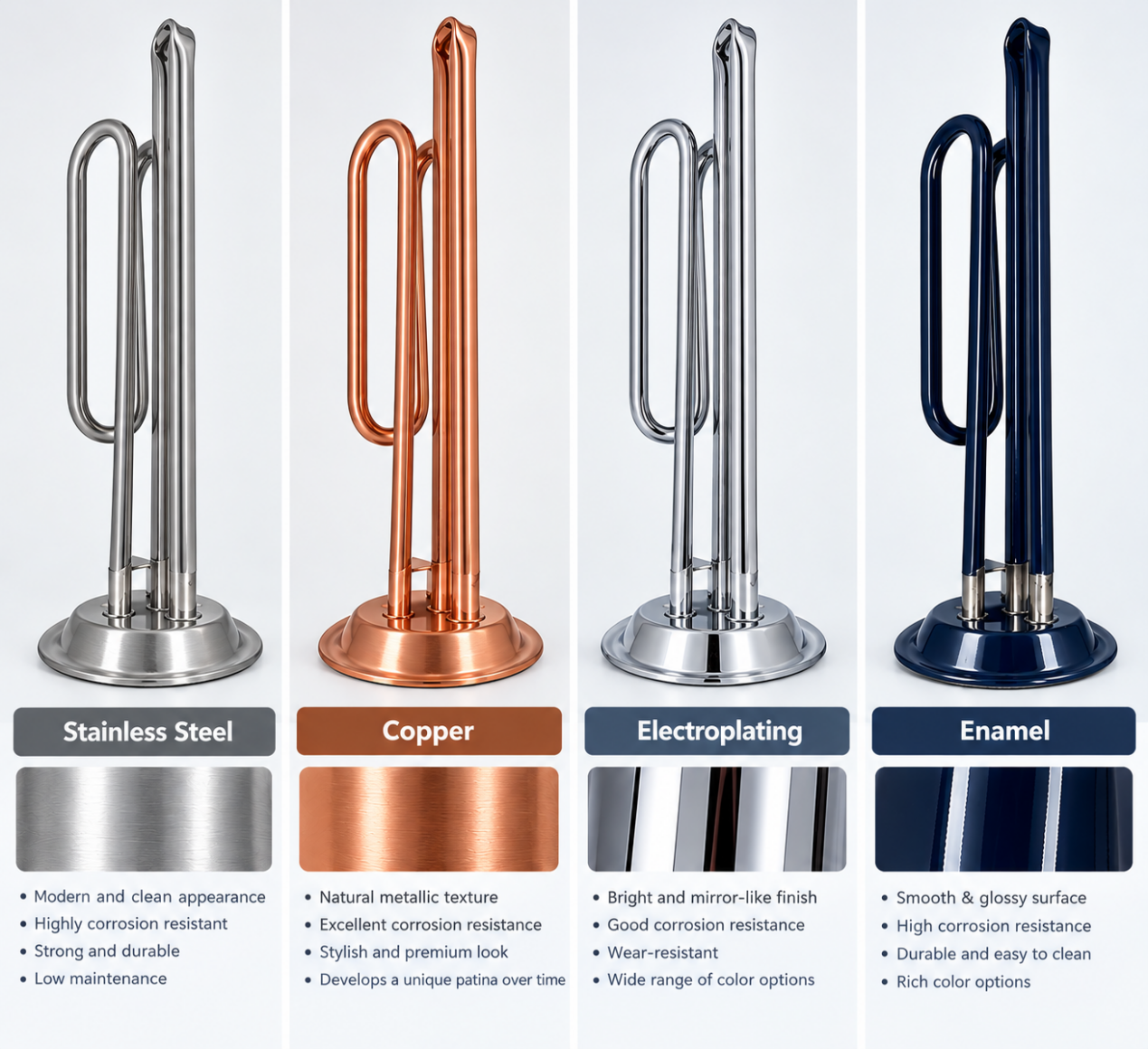
Material Science Comparison: Stainless Steel vs. Copper vs. Anti-Corrosion Enamel Coatings
Selecting the appropriate sheath material determines how effectively a water heater withstands harsh mineral chemistry over long operational cycles. Stainless steel alloys, such as SUS304 or SUS316, serve as common heating sheath materials due to their tensile strength and low manufacturing cost. However, stainless steel exhibits high vulnerability to chloride-induced pitting and stress corrosion cracking in hard water environments. Chloride ions penetrate passive oxide layers on stainless steel surfaces, creating microscopic pits that expand rapidly under high thermal stress.
Uncoated copper heating tubes offer superior thermal conductivity, but they react readily with dissolved oxygen and acidic mineral compounds. Over time, copper sheaths undergo oxidation and chemical erosion, leading to thinning tube walls and structural failure. In contrast, advanced vitreous enamel coatings provide a superior chemical barrier for heating elements. Specialized porcelain enamel fuses onto the metallic tube surface at temperatures exceeding 800°C, forming a non-porous, glass-ceramic protective shield. This ultra-smooth vitreous layer prevents mineral scale crystals from adhering securely to the heating sheath. Furthermore, fused enamel exhibits complete chemical inertness against acid and alkali erosion, extending heating element lifespan significantly in aggressive water conditions.
Dual-Layer Protection Engineering: Combining Enamel Heating Elements with Blue Diamond Tanks
Achieving complete corrosion resistance requires a holistic engineering approach that protects both heating elements and internal storage vessels simultaneously. Advanced manufacturing practices apply vitreous porcelain enamel coatings to heating element sheaths through automated electrostatic powder coating processes. High-temperature furnace firing melts the enamel powder into a continuous, seamless glass-ceramic matrix that seals the underlying metal substrate completely. This protective layer isolates metallic conductors from aggressive water ions, preventing chemical degradation and stray electrical currents.
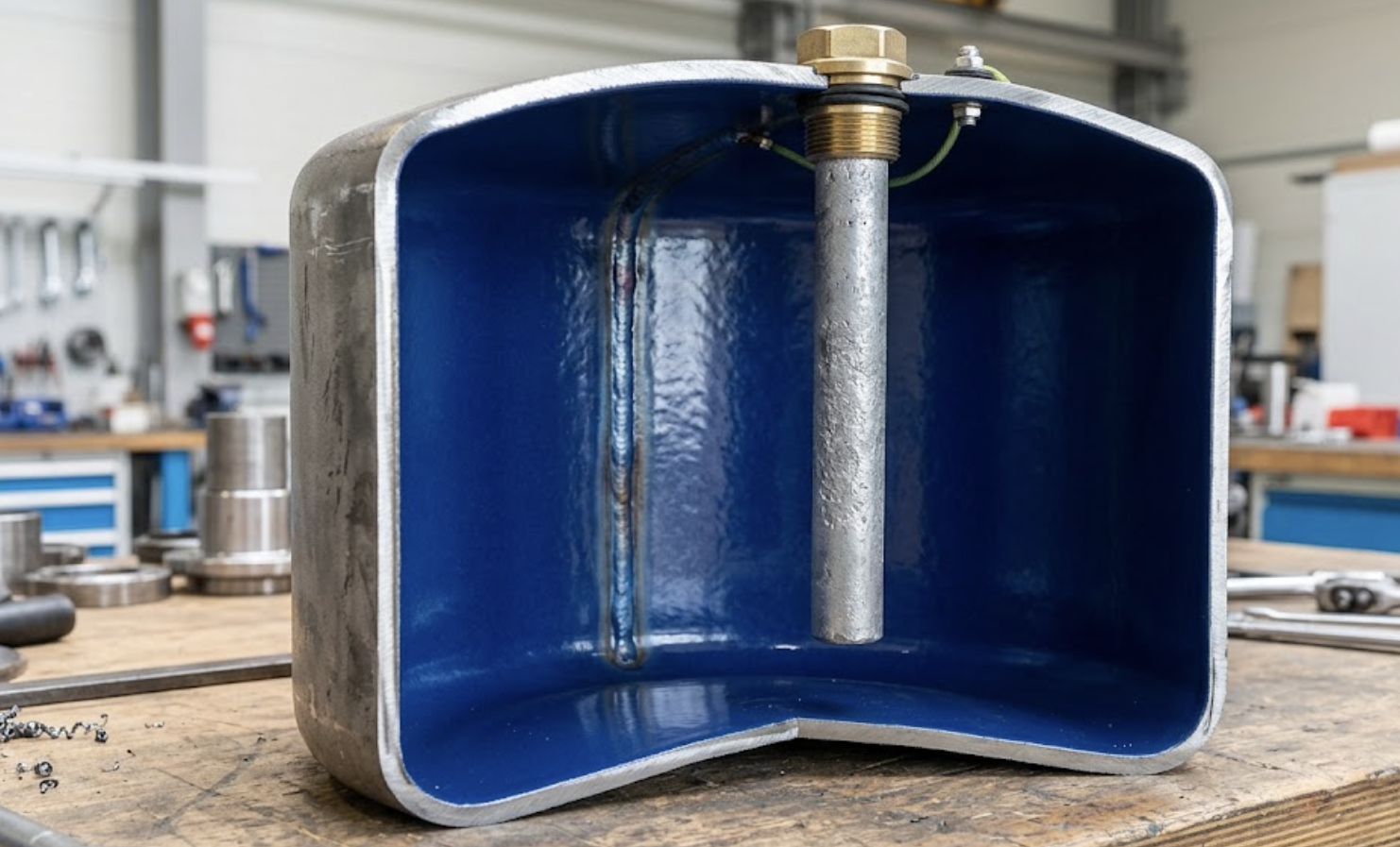
When engineers combine enamel-coated heating tubes with Blue Diamond enamel inner tanks, the heating assembly forms a robust dual-layer protection system. The Blue Diamond porcelain lining covers the interior steel tank walls, while single welding line technology minimizes structural seam vulnerabilities. To complement this physical barrier, engineers integrate sacrificial magnesium anode rods into the vessel structure. The magnesium anode releases electrons continuously through electrochemical action, neutralizing corrosive oxygen radicals and mineral ions in the water. This sacrificial mechanism provides active cathodic protection, safeguarding tiny microscopic pinholes or connection flanges from galvanic oxidation.
Preventive Maintenance Protocols for Hard Water Operations
Even advanced water heating systems require structured preventive maintenance protocols to maintain peak operational efficiency in severe hard water regions. Property managers and maintenance technicians should implement systematic inspection routines to monitor protective components before mechanical failures occur. Regularly evaluating the sacrificial magnesium anode rod represents one of the most critical maintenance steps. Because magnesium corrodes preferentially to protect interior steel and heating sheaths, the anode rod depletes gradually over time. Technicians should inspect magnesium anode consumption annually and replace depleted rods when diameter loss exceeds fifty percent.
In addition to anode audits, routine descaling flushing procedures remove loose mineral sediment from storage vessels. Over extended operation, calcified scale flakes settle at the bottom of heating chambers, blocking drainage ports and creating stagnant mud zones. Opening the bottom drain valve periodically flushes out accumulated mineral sludge, preventing localized thermal traps around lower heating element mounts. Furthermore, commercial building operators can perform mild food-grade citric acid rinses during scheduled maintenance cycles. Citric acid solutions dissolve stubborn mineral scale safely without damaging protective vitreous enamel coatings or rubber sealing gaskets.
Product and Accessory Engineering: Evaluating Jajalo Material Standards
Delivering long-term reliability in aggressive water environments requires rigorous quality control across every component within the heating assembly. Specialized manufacturing practices executed by Jajalo ensure that heating elements, flange mounts, temperature sensors, and sealing gaskets meet precise mechanical standards. Engineering teams select high-grade brass and stainless steel alloys for mounting flanges to prevent galvanic corrosion at tank connection points. Furthermore, specialized synthetic rubber gaskets maintain elastic memory under continuous thermal cycling, preventing moisture ingress into electrical terminal housing assemblies. Commercial buyers can examine specialized product accessories to verify material specifications and component compatibility for replacement engineering.
Integrating these precision components into complete storage heating systems creates durable appliances tailored for hard water regions. For example, the YB-001 metal shell vertical storage series incorporates a single-weld Blue Diamond enamel inner tank paired with heavy-duty heating elements and high-density polyurethane insulation. The single-seam tank architecture eliminates structural stress points, while the enamel coating prevents internal rust accumulation. By pairing Blue Diamond vessel linings with high-efficiency heating accessories, Jajalo delivers reliable water heating performance across diverse residential and commercial building developments.
Manufacturing Excellence: Partnering with GUANGDONG JIA JIALE ELECTRIC APPLIANCE CO., LTD
Navigating severe water quality challenges successfully requires establishing direct partnerships with experienced original equipment manufacturers. Partnering directly with an established enterprise such as Jajalo(GUANGDONG JIA JIALE ELECTRIC APPLIANCE CO., LTD) provides global distributors, real estate developers, and engineering contractors with advanced manufacturing capabilities and verified quality assurance protocols. Direct factory collaboration eliminates third-party supply chain markups while ensuring that every production batch undergoes stringent testing standards.
Manufacturing facilities operated by GUANGDONG JIA JIALE ELECTRIC APPLIANCE CO., LTD implement automated production lines and comprehensive testing protocols. Quality control technicians subject heating elements and pressure vessels to rigorous dielectric withstand testing, high-pressure hydrostatic trials, and accelerated acid-resistance testing. Furthermore, complete OEM and ODM customization services allow commercial clients to specify operating voltages, element wattage configurations, flange dimensions, and branded packaging to suit regional market requirements. By combining material science innovation with factory-direct sourcing, Jajalo provides reliable water heating solutions that deliver exceptional durability across global markets.
For complete technical specifications, customized OEM inquiries, and product catalogs, prospective commercial partners can visit the official corporate website at https://www.jiajialo.com/.
Source :GUANGDONG JIA JIALE ELECTRIC APPLIANCE CO., LTD
This article was originally published by IssueWire. Read the original article here.
More News










YOUR NEWS, OUR NETWORK.
Do you have Great News you want to tell the world?
Be it updates about your business or your community, you can make sure that it’s heard by submitting your story to our network reaching hundreds of news sites across 6 verticals.